


What Actually Makes an Orthodontist the Best?
When you search for the best orthodontist, you’re looking for more than just someone who can straighten teeth. You want a provider who combines clinical expertise with genuine care, someone who explains what’s going on with your bite and gives you a clear plan before you leave the office.
What separates the great orthodontists from the rest? It starts with training. Board certification and a specialized residency matter because they represent years of focused study that general dental programs don’t cover. But credentials only tell part of the story. The orthodontists patients remember are the ones who communicate openly and build a care experience around each individual. At Saint Johns Orthodontics, Dr. Ouellette builds every patient relationship around these qualities.
Board-certified orthodontists complete two to three years of specialized residency training beyond dental school. This focused education covers tooth movement, jaw development, and bite correction in ways that general dental training simply doesn’t. Think of it this way: there’s a real difference between someone who took a weekend course and someone who dedicated years to mastering the specialty.
But credentials alone don’t make an orthodontist “the best” for you. The orthodontists patients rave about are the ones who listen. They take time to understand your goals, explain your options clearly, and answer questions without rushing. They build trust through transparency.
Real patient satisfaction extends far beyond the final result. It includes how you’re treated by the team, how comfortable you feel during visits, and whether the practice respects your time and budget. A beautiful smile matters, but so does enjoying the process of getting there.
How to Evaluate an Orthodontist: A Step-by-Step Patient Guide
Here’s how to break down your decision into manageable steps so you can choose with confidence.
Verify Credentials First
Confirm the orthodontist completed an accredited residency program. Look for board certification through the American Board of Orthodontists (ABO), which requires passing rigorous written and clinical examinations. Active membership in the American Association of Orthodontists (AAO) is another positive indicator.
Why Should I Read Patient Reviews?
Google reviews offer valuable insights into real patient experiences. Look beyond star ratings and read the actual comments. Notice patterns: Do multiple patients mention the friendly team? Are there consistent complaints about wait times? Recent reviews carry more weight than older ones, and detailed feedback is more useful than vague praise. Spend ten minutes reading reviews before you spend months in a practice.
The Value of Referrals
Your general dentist works with orthodontists regularly and can recommend trusted specialists. Friends, family members, and coworkers who’ve had orthodontic care are also great resources. Ask them what they loved about their time in treatment and what they’d do differently.
What Happens at a Free Consult?
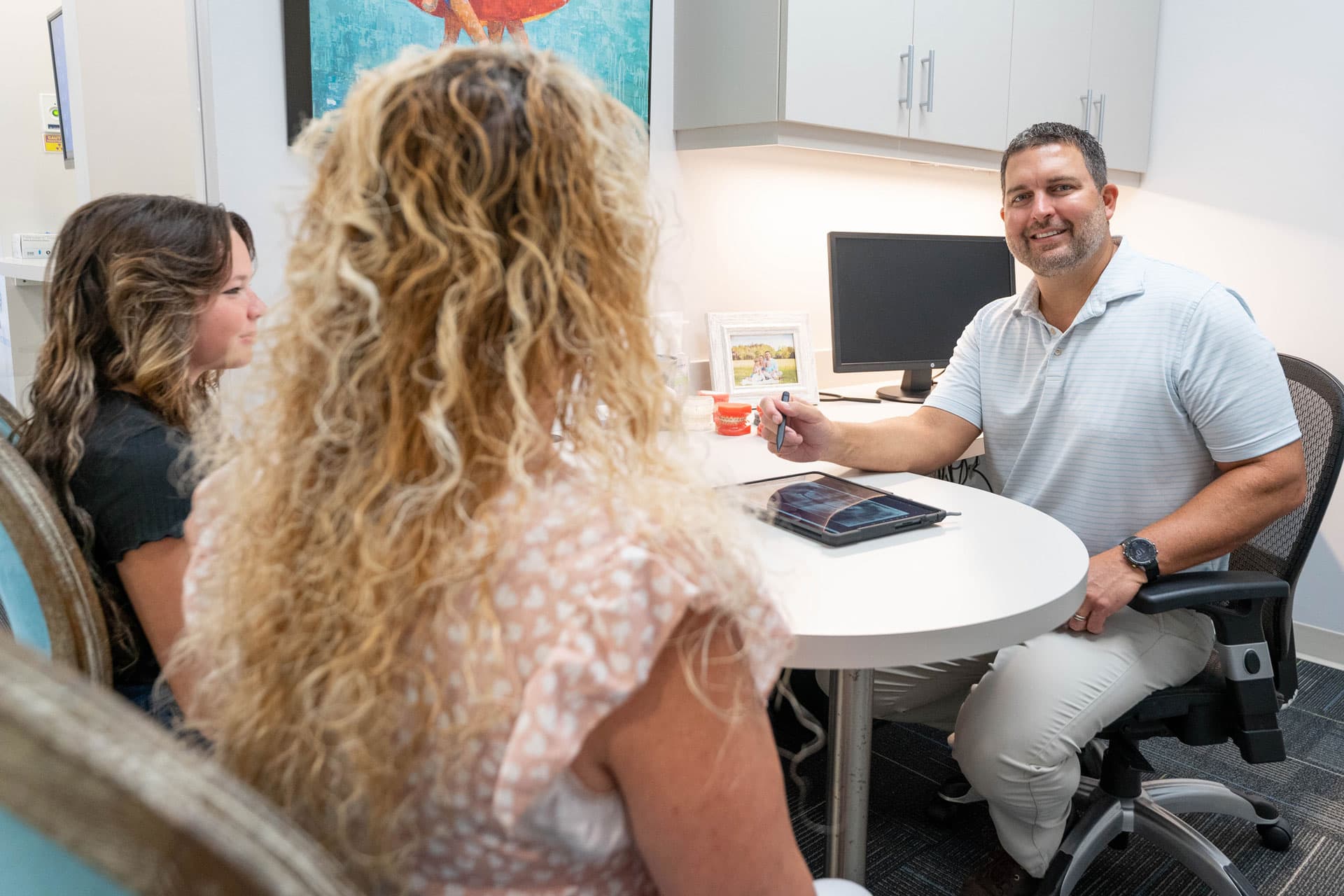
A free consult lets you experience the practice firsthand. Pay attention to how the team greets you, whether the office feels welcoming, and how thoroughly the orthodontist explains your options. Board-certified orthodontist Dr. Ouellette, for example, walks every new patient through a full evaluation and answers questions before discussing next steps. Do they listen to your concerns? Do they respond patiently? Trust your gut.
How Do I Compare My Options?
Don’t feel pressured to commit right away. Compare individualized care plans, technology offerings, and communication styles between practices. The best fit combines clinical expertise with a team you actually enjoy seeing every few weeks.
5 Benefits of Choosing the Right Orthodontist (According to Patients)
Choosing the right orthodontist leads to individualized care plans, access to modern technology, shorter timelines, transparent pricing, and a more comfortable experience overall. Patients who take time to find the right fit report much better outcomes. Here’s what they say matters most.
How Does the Right Orthodontist Individualize Your Care?
The best orthodontists don’t offer one-size-fits-all solutions. They consider your lifestyle, aesthetic preferences, and timeline when recommending a path forward. A busy professional might prefer Invisalign, while a teenager might want colorful braces. Your orthodontist should ask about your daily life before recommending anything.
Technology That Actually Improves Your Experience
Yes, patients notice when a practice invests in the latest orthodontic technology. Digital scanning replaces messy impressions. Self-ligating braces mean fewer adjustment visits. And Invisalign offers a discreet option that fits into daily life without much disruption. Patients at Saint Johns Orthodontics frequently mention how much more comfortable modern tools make the process compared to what they expected.
What About Treatment Timelines and Office Comfort?
Orthodontists using current techniques and technology often achieve results more efficiently. Better planning and precision can mean fewer visits and shorter overall timelines. Whether you’re bringing your seven-year-old for an evaluation or starting your own orthodontic care as an adult, the right practice makes everyone feel at ease. This matters when you’ll be visiting regularly for months or years.
Does Transparent Pricing Really Matter?
Absolutely. Clear pricing with no surprises rounds out the list of what patients value most. Top practices are upfront about what things will run and offer flexible affordable monthly payments. You should know what you’re paying before anything starts, with a plan that fits your budget.
Building a Relationship You Can Count On
The best orthodontist is someone you trust over the long term. Orthodontic care isn’t a single visit; it’s a relationship that lasts months or even years. Patients consistently say that feeling heard, respected, and welcomed at every visit makes the entire experience better. When you genuinely like your orthodontist and their team, you’re more likely to follow your care plan and show up to every visit on time.
Orthodontist vs. Dentist for Braces: What Patients Wish They Knew
This is one of the most common questions patients have, and the answer matters more than you might think. Orthodontists differ from general dentists in five key areas: training depth, clinical focus, board certification, complex case handling, and technology investment.
| Factor | Orthodontist | General Dentist |
|---|---|---|
| Training | 2-3 year specialized residency after dental school | General dental training, which covers a broad foundation |
| Focus | Exclusively tooth movement and jaw alignment | Wide range of dental services including cleanings, fillings, and more |
| Board Certification | ABO certification available and voluntary | No orthodontic-specific board certification exists |
| Complex Cases | Trained to handle severe crowding, bite issues, jaw concerns | Handles straightforward cases well; may refer complex ones to specialists |
| Technology Investment | Specialized orthodontic equipment and workflows | General dental equipment suited to a broader scope of care |
So what does that extra training actually cover? Orthodontists complete a dedicated residency focused entirely on moving teeth and correcting jaw relationships. Growth and development, biomechanics, treatment planning: all of it gets studied at a depth that general dental education doesn’t reach. Dr. Ouellette completed this type of advanced residency training, which is why ABO board-certified specialists like him can handle the full range of orthodontic cases.
General dentists do excellent work within their scope. Many offer Invisalign for straightforward cases, and they play a critical role in your overall oral health. But when crowding is severe, when bites don’t align properly, or when jaw growth needs guidance, an orthodontic specialist brings training that makes a real difference.
How can you tell the difference? Board-certified orthodontists have passed demanding ABO examinations that test both knowledge and clinical skill. According to the American Association of Orthodontists, only orthodontists can be board certified by the ABO.
Patients who choose specialists report higher satisfaction and fewer mid-course complications. When your smile is on the line, that specialized training counts.
What Affects the Cost of Orthodontic Treatment?
Orthodontic costs depend on four main factors: treatment type (metal braces, ceramic, or Invisalign), case complexity, insurance coverage, and available payment plans. Most practices, including Saint Johns Orthodontics, offer free consults to provide individualized estimates. Understanding these factors helps you budget realistically and recognize value when you see it.
How Does Treatment Type Affect Pricing?
Traditional metal braces, ceramic braces, and Invisalign each come with different price points. Invisalign and ceramic options typically run higher than metal braces, though the gap has narrowed in recent years.
Does Case Complexity Change the Cost?
Your specific case matters most. Simple spacing issues require less time and fewer visits than complex bite corrections or severe crowding. The more work your teeth need, the longer treatment takes, and the higher the overall investment.
Insurance coverage varies widely. Some plans cover orthodontic care for children but not adults. Others provide partial coverage for anyone. Check whether a practice is in-network with your insurance, as this can significantly reduce your out-of-pocket amount. Many practices also offer interest-free financing and flexible affordable monthly payments to make orthodontic care accessible to more families.
The best way to understand your actual numbers is to schedule a free consult. You’ll receive an individualized plan and estimate with no obligation.
Who Should Be Looking for a Top Orthodontist? (It’s Not Just Kids)
If you think orthodontic care is just for teenagers, you might be surprised. Patients of all ages benefit from seeing a specialist.
When Should Children See an Orthodontist?
The AAO recommends every child have an orthodontic evaluation by age seven. At this age, an orthodontist can spot developing concerns and determine whether early intervention could prevent more extensive work later. Not every child needs early care, but catching issues at this stage gives you more options.
Is It Too Late for Adults to Get Braces?
Not at all. At Saint Johns Orthodontics, a growing number of our patients today are adults. Adults seek orthodontic care for many reasons: they never had braces as kids, their teeth have shifted over time, or they want to improve their smile for personal or professional reasons. Modern options like Invisalign make adult treatment more discreet than ever.
Adolescence remains the most common time for orthodontic care, since permanent teeth have erupted but jaw growth is still occurring.
Common signs you may need orthodontic care include:
- Crowded or overlapping teeth
- Gaps between teeth
- Overbite, underbite, or crossbite
- Difficulty chewing or biting (even occasional discomfort counts)
- Jaw discomfort or clicking
- Self-consciousness about your smile
A free consult is the simplest way to find out if care is right for you. Dr. Ouellette and the Saint Johns Orthodontics team evaluate patients of all ages and can recommend the best path forward for your specific situation.
Frequently Asked Questions About Finding the Best Orthodontist
How do I know if an orthodontist is board certified?
Visit the American Board of Orthodontists directory at americanboardortho.com to verify board certification. Search by name or location to confirm an orthodontist has passed the required examinations. Board certification is voluntary, so not all orthodontists pursue it, but it signals a strong commitment to clinical excellence. Dr. Ouellette is an ABO board-certified orthodontist at Saint Johns Orthodontics.
What should I expect at a free orthodontic consult?
A free consult typically includes a clinical examination, digital X-rays or scans, and a discussion of your options. You’ll learn about the recommended approach, estimated timeline, and total investment. This is also your chance to ask questions and get a feel for the practice atmosphere. There’s no obligation to proceed.
Are online reviews reliable when choosing an orthodontist?
They can be, when you know what to look for. Focus on volume, recency, and specific details. A practice with hundreds of recent reviews is more reliable than one with just a handful. Look for patterns in feedback rather than isolated comments. Reviews that mention specific team members or describe the orthodontic experience in detail tend to be most trustworthy.
Is Invisalign as effective as braces?
Yes, for many orthodontic cases, Invisalign achieves excellent results. It works well for mild to moderate crowding, spacing issues, and certain bite corrections. Complex cases may still benefit from traditional braces, so Dr. Ouellette can recommend the best option for your specific needs.
Can I switch orthodontists mid-treatment?
Yes, you can transfer your care to a different orthodontist if needed. Switching mid-course may affect your pricing and timeline, though. The new orthodontist will need to evaluate your current progress and may recommend adjustments to the plan. If you’re considering a switch, schedule a free consult to discuss the transition process.
Choosing the right orthodontist is one of the most important decisions you’ll make for your smile. Take your time, ask the right questions, and trust what you observe during your first visit. The right practice will feel right from the moment you walk in the door.